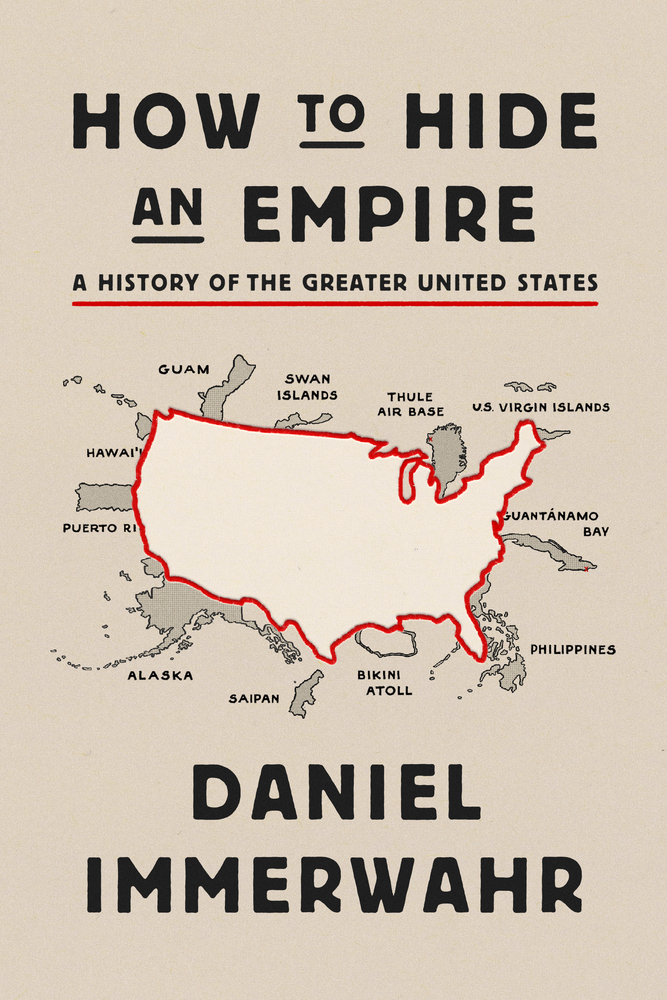
If you, like me, have ever had to select your country on a form and toggled past the option for ‘United States minor outlying islands’ without a second thought, then this book is for you. If, like me, your default image of the US is the 48 contiguous states – what Immerwahr calls the “logo map” – then this book is for you. Honestly, even if you don’t fall into either of those two categories, the book is still probably for you because it breaks down assumptions and understandings of “what is the US” going back decades.
Through this book you’ll learn why Guam was attacked, even occupied by the Japanese, but Pearl Harbor became the rallying cry of the US involvement in WWII. You’ll learn how textile manufacturing was outsourced to islands most Americans wouldn’t know were territories so the tags could read “Made in America”, and so much more. I know, at a time when immigration is a volatile topic, it could be easy to see this book as overtly political. I would encourage any reader, especially in the US, to not fall into that trap. Immerwahr does an incredible job of factually addressing the role territories have played in the history of the US and how the acknowledgment or obfuscation of these territories have served various agendas over the years, spanning many presidents and ruling parties.
Though not one of the primary focuses of the book, one of my favorite sections was on the standardization implemented under Herbert Hoover. Poor Herbert gets a bad rap for being in charge during the Depression, but his foresight into the importance of creating industry standards across the states gave the US an immense advantage when needing to implement standards with allies during WWII. I can honestly say that before reading this I had never thought twice about the size of a screw thread, but my goodness am I glad Herbert had.
I could easily start the book from the beginning and learn something new – there is so much information to glean from its pages. As one of the most educational books I’ve read this year, I would highly recommend it to any reader, even if you don’t call the US (and all that it entails) your home.
2% Rating: 9/10
Recommend? Absolutely
Re-Read? Definitely
Time: 1:22